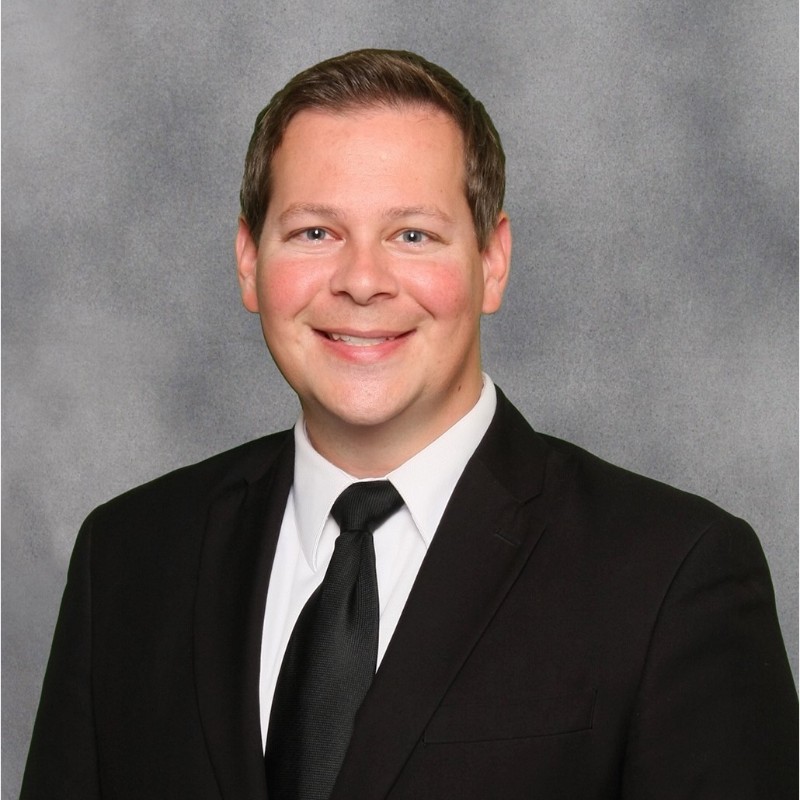
Southern Winds Fanfare (2022) by John Dupuis
John Dupuis (b. 1980) is entering his twentieth year as a music educator in the State of Florida and is currently the Music Supervisor for Volusia County Schools. Prior to this appointment, Mr. Dupuis was the Director of Bands and Orchestras at Spruce Creek High School. In addition, he is past Conductor of the Florida Symphony Youth Orchestra (7 years), Sarasota Orchestra Youth Symphony (2 years) and the Summer at the Symphony Music Program, and for six years was the Director of Bands at Howard W. Blake Performing Arts High School in Tampa, Florida. Mr. Dupuis received his Bachelor’s degrees in Music Education and Music Composition and his Master of Music degree from the University of South Florida. His works are published through Wingert-Jones, Daehn Music Publications and Wehr’s Music House Publishers. – Amended from score
Southern Winds Fanfare was written for the Southern Winds, a central Florida-based ensemble conducted by Dr. Douglas Phillips, to be premiered at the 2022 Florida Bandmaster’s Association Summer Conference. This work was intended to serve as an exciting and festive start to the concert after a two-year Covid hiatus. The piece begins with a heroic ‘A’ theme fanfare, first introduced by the trumpets and horns. This theme, along with the sweeping ‘B’ theme presented by the upper woodwinds, comprises most of the compositional material used throughout the piece. Southern Winds Fanfare ends with a final restatement of the ‘A’ theme followed by culminating thematic material presented in full celebratory form. – From score
Want to program Southern Winds Fanfare for your ensemble? Follow this link!
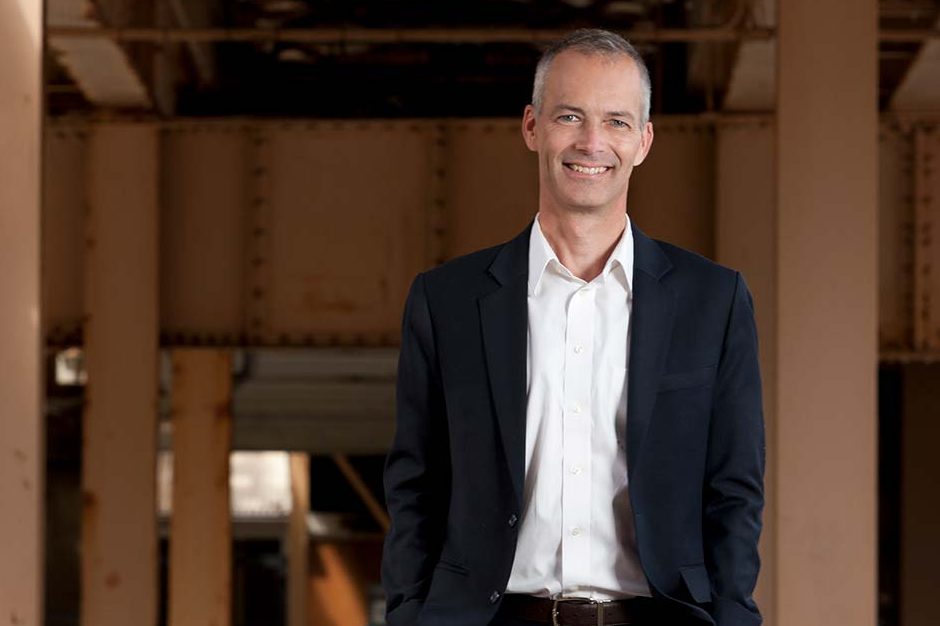
Chorale in Blue (2018) by James Stephenson
James M. Stephenson (b. 1969) came late to his full-time composing career, having performed 17 seasons as a trumpeter in the Naples Philharmonic in Florida. As such, the composer is largely self-taught, making his voice truly individual and his life’s work all the more remarkable. Well represented in recordings, his extensive catalog for all instruments can be heard on over 30 CDs. A highly sought-after arranger and conductor, his arrangements have been performed/recorded/broadcast by virtually every major orchestra in the country, and Stephenson has led orchestras in Bozeman, Charleston, Ft. Myers, Modesto, and Wyoming, in addition to numerous concert bands. His works have additionally been frequently performed by the nation’s leading military bands, with recent works being premiered by the United States Marine Band and the joint armed forces band. – Amended from composersjim.com
Chorale in Blue was inspired by nothing other than the thought of a dark street at night, perhaps lit up by a solitary street lamp, and the thoughts that might occur in one’s mind in such a spot. It is also an exercise in the blues scale, in several keys, so that the players might have an opportunity to familiarize themselves with the constructs of such an important musical root of our American history. The music is sometimes thoughtful, or sometimes animated, and sometimes gritty, but should always hopefully be fun to play. – Program Note by composer
Want to program Chorale in Blue for your ensemble? Follow this link!
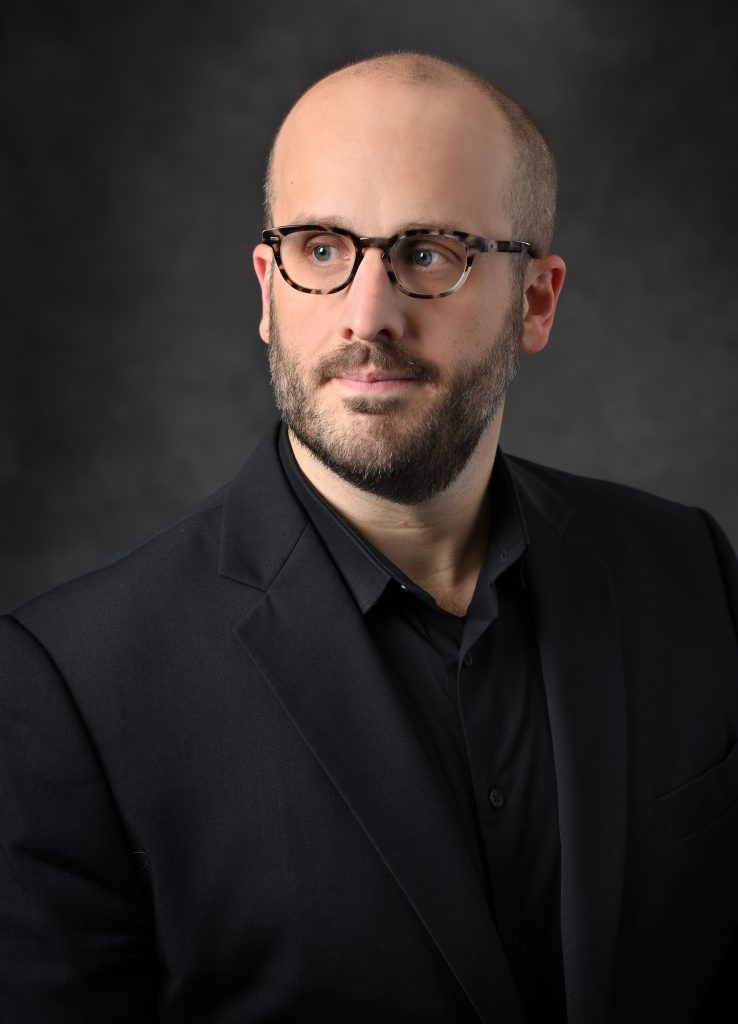
Unquiet Hours (2017) by David Biedenbender
THE HOUR OF TWILIGHT by George William Russell
WHEN the unquiet hours depart
And far away their tumults cease,
Within the twilight of the heart
We bathe in peace, are stilled with peace.
The fire that slew us through the day
For angry deed or sin of sense
Now is the star and homeward ray
To us who bow in penitence.
We kiss the lips of bygone pain
And find a secret sweet in them:
The thorns once dripped with shadowy rain
Are bright upon each diadem.
Ceases the old pathetic strife,
The struggle with the scarlet sin:
The mad enchanted laugh of life
Tempts not the soul that sees within.
No riotous and fairy song
Allures the prodigals who bow
Within the home of law, and throng
Before the mystic Father now,
Where faces of the elder years,
High souls absolved from grief and sin,
Leaning from out ancestral spheres
Beckon the wounded spirit in.
Composer David Biedenbender (b. 1984) has written music for the concert stage as well as for dance and multimedia collaborations. His work is often influenced by diverse musical experiences in rock and jazz bands as a bassist, in wind, jazz, and New Orleans-style brass bands as a euphonium, trombone, and tuba player, and by study of Indian Carnatic Music. He is currently Associate Professor of Composition in the College of Music at Michigan State University, and he holds degrees in composition from the University of Michigan and Central Michigan University.
Unquiet Hours is about the unquiet hours—the times when sadness, doubt, anxiety, loneliness, and frustration overwhelm and become a deluge of unceasing noise. When the distant din of the past and the steadily approaching uncertainty of the future grow closer and become louder than the present moment. When the world swirls and churns like a hurricane of discord and anger. And this piece is about finding peace inside this noise—it is about listening, it is about being still, and it is about empathy.
Musically, there is one central idea in this piece: an idée fixe around which everything centers. This idea is repeated and varied—even meditated upon—slowly changing color and shape, becoming increasingly tumultuous until eventually returning to the quiet stillness of the opening.
The title comes from the opening line of George William Russell’s poem The Hour of Twilight.
Want to program Unquiet Hours for your ensemble? Follow this link!
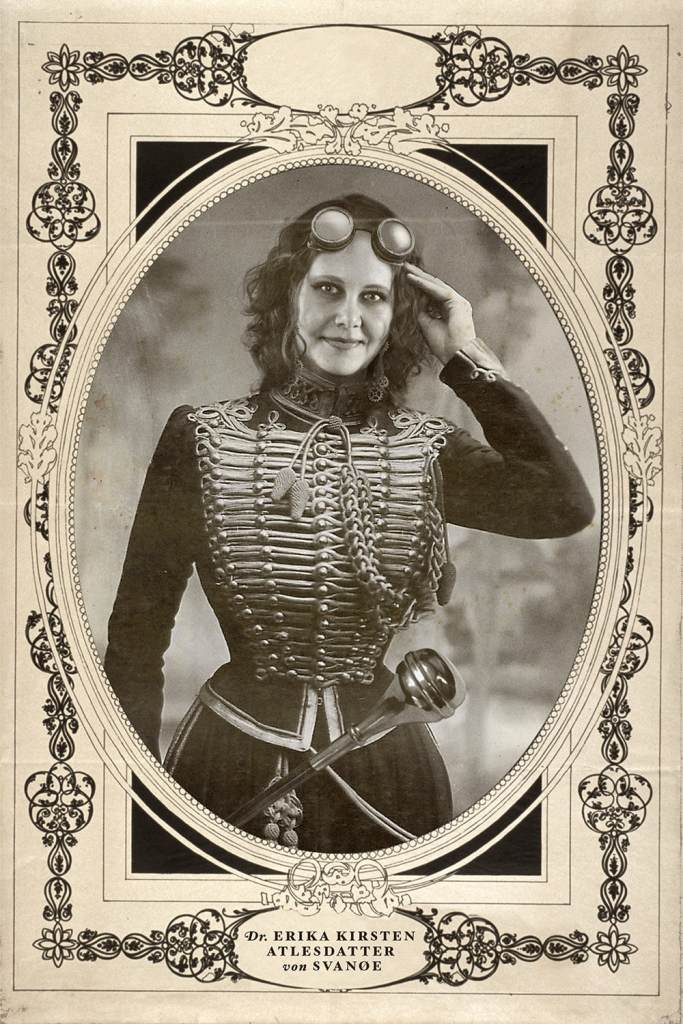
Steampunk Scenes by Erika Svanoe
Dr. Erika Svanoe (b. 1976) is a conductor and composer for wind band, known for her lyrical melodies, nods to classic literature, and musical deconstruction, humor, and pastiche. Her works have been performed internationally by school, university, community, and professional bands. Her first major work, The Haunted Carousel, won the 2014 NBA Young Band Composition Contest. As a conductor, Dr. Svanoe has held residencies with the USAF Heritage of America Band, the Atlanta Freedom Bands, and numerous universities. She has held collegiate appointments at Augsburg University, Bemidji State University, and the University of New Hampshire. She is active as a guest conductor and clinician, appearing with high school, university, and festival ensembles across the United States. She earned a Doctor of Musical Arts in Conducting from The Ohio State University, a Master of Music in Wind Conducting from Oklahoma State University, and a Bachelor of Music Education from the University of Wisconsin–Eau Claire. She currently lives in Menomonie, WI with her husband, designer and graphic novelist Erik Evensen. – from composer website
“Steampunk” refers to a subgenre of science fiction and sometimes fantasy that incorporates technology and aesthetic designs inspired by 19th-century industrial steam-powered machinery. It places an emphasis on steam- or spring- propelled gadgets. Steampunk Scenes (2015) attempts to depict various scenes that take place in a fictional alternate history that features notable people alive in the Victorian era, including Charles Ives, Marie Curie, H.G. Wells, Jules Verne, P.T. Barnum and Nikola Tesla. It borrows from popular music of the area, including the cakewalk, march, waltz, and the song Daisy Bell. These are combined with sounds of clockwork and imagined steam technology. It also borrows various musical elements from numerous composers of time, including Ives, Sousa, Satie, Karl King, Stravinsky, and Weill, with some Khachaturian and Danny Elfman thrown in for good measure. – from score
1. Charlie and the Mechanical Man Marching Band
3. Bertie Wells attends Mr. Verne’s lecture on flying machines
4. Barnum & Tesla’s Tandem Bicycle
Want to program Steampunk Scenes for your ensemble? Follow this link! A version for concert band is also available here!
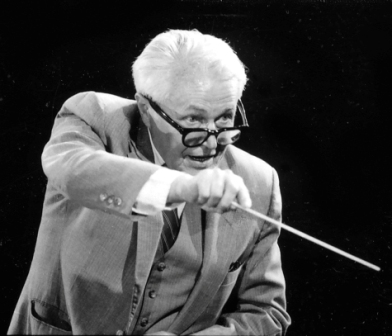
Trittico (1963) by Vaclav Nelhybel
Internationally renowned composer Vaclav Nelhybel (1919-1996) was born on September 24, 1919, in Polanka, Czechoslovakia. He studied composition and conducting at the Conservatory of Music in Prague (1938-42) and musicology at Prague University and the University of Fribourg, Switzerland. After World War II he was affiliated as composer and conductor with Swiss National Radio and became lecturer at the University of Fribourg. In 1950 he became the first musical director of Radio Free Europe in Munich, Germany, a post he held until he immigrated to the United States in 1957. Thereafter, he made his home in America, becoming an American citizen in 1962. After having lived for many years in New York City, he moved to Ridgefield and Newtown, Connecticut, and then, in 1994, to the Scranton area in Pennsylvania. During his long career in the United States he worked as composer, conductor, teacher, and lecturer throughout the world. At the time of his death on March 22, 1996, he was composer in residence at the University of Scranton.
Nelhybel was a synthesist and a superb craftsman who amalgamated the musical impulses of his time in his own expression, choosing discriminately from among existing systems and integrating them into his own concepts and methods. The most striking general characteristic of his music is its linear-modal orientation. His concern with the autonomy of melodic line leads to the second, and equally important characteristic, that of movement and pulsation, or rhythm and meter. The interplay between these dual aspects of motion and time, and their coordinated organization, results in the vigorous drive so typical of Nelhybel’s music. These elements are complemented in many of his works by the tension generated by accumulations of dissonance, the increasing of textural densities, exploding dynamics, and the massing of multi-hued sonic colors. Though frequently dissonant in texture, Nelhybel’s music always gravitates toward tonal centers, which makes it so appealing to performers and listeners alike. – from Scranton.edu
Trittico was composed in 1963 for Dr. William D. Revelli who gave the first performance of the work in the spring of 1964, in Ann Arbor, with the Symphonic Band of the University of Michigan.
The first and third movements are, in several ways, related to one another: their character is brilliantly forward-moving and energetic; the main theme of the first movement reappears in the culmination point of the third movement, and the instrumentation of the movements is identical (standard), with the individual instruments themselves being used quite similarly.
The second movement is a strongly contrasting dramatic scene with turbulent recitatives and expressive woodwind solos, punctuated by low brass and percussion. The emphasis is on the woodwinds and the low brass; cornets and trumpets enter only at the very end with an extremely intense phrase to conclude the movement. The dramatic character is underlined by the strong use of percussion which is extended by a second timpani player, piano and celesta. – from score
Want to program Trittico for your ensemble? Follow this link!
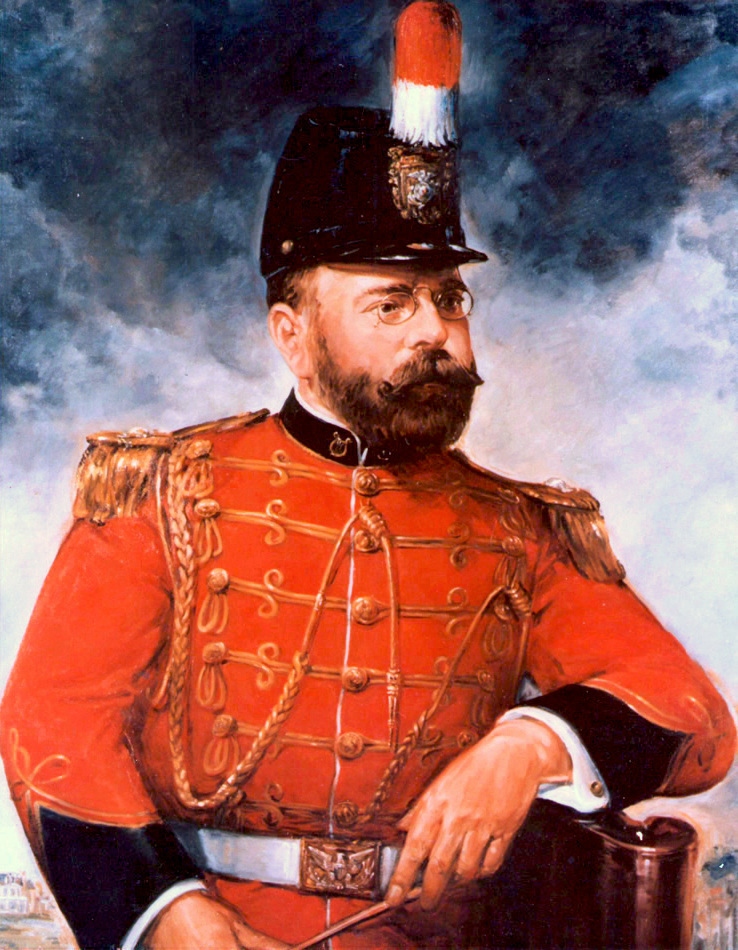
Bullets and Bayonets (1918) by John Philip Sousa
John Philip Sousa (1854-1932) was America’s best known composer and conductor during his lifetime. Highly regarded for his military band marches, Sousa is often called the “The March King” or “American March King”.
Sousa was born the third of 10 children of John Antonio Sousa (born in Spain of Portuguese parents) and Maria Elisabeth Trinkhaus (born in Bavaria). His father played trombone in the U.S. Marine band, so young John grew up around military band music. When Sousa reached the age of 13, his father enlisted him as as an apprentice of the United States Marine Corps. Sousa served his apprenticeship for seven years, until 1875, and apparently learned to play all the wind instruments while also continuing with the violin.
Several years later, Sousa left his apprenticeship to join a theatrical (pit) orchestra where he learned to conduct. He returned to the U.S. Marine Band as its head in 1880, and remained as its conductor until 1892. He organized his own band the year he left the Marine Band. The Sousa Band toured 1892-1931, performing 15,623 concerts in America and abroad. Sousa wrote 136 independent marches, while a host of other marches and dances have been adapted from his stage works. Despite the genre’s relatively limited structure, Sousa’s marches are highly varied in character. The vast majority are in the quickstep dance style and a third of their titles bear military designations. His earlier marches are best suited for actual marching, while later works are increasingly complex. – Amended from windrep.org. Learn more about Sousa’s life here!
More than many of Sousa’s other marches, Bullets and Bayonets (1918) has a distinctly military character. In studying the music, Sousa’s apparent inspiration by visions of battlefield glory is not difficult to imagine. But perhaps its war-like title accounted for the relative lack of popularity.
There is no record of solicitation by a specific regiment, but the march was dedicated “To the officers and men of the U.S. Infantry.” – from Paul E. Bierley, The works of John Philip Sousa (Westerville, Ohio: Integrity Press, 1984)
Want to program Bullets and Bayonets for your ensemble? Follow this link! Tonight’s performance stems from the United States Marine Band’s edition, available here for free.
 Adam Wallace